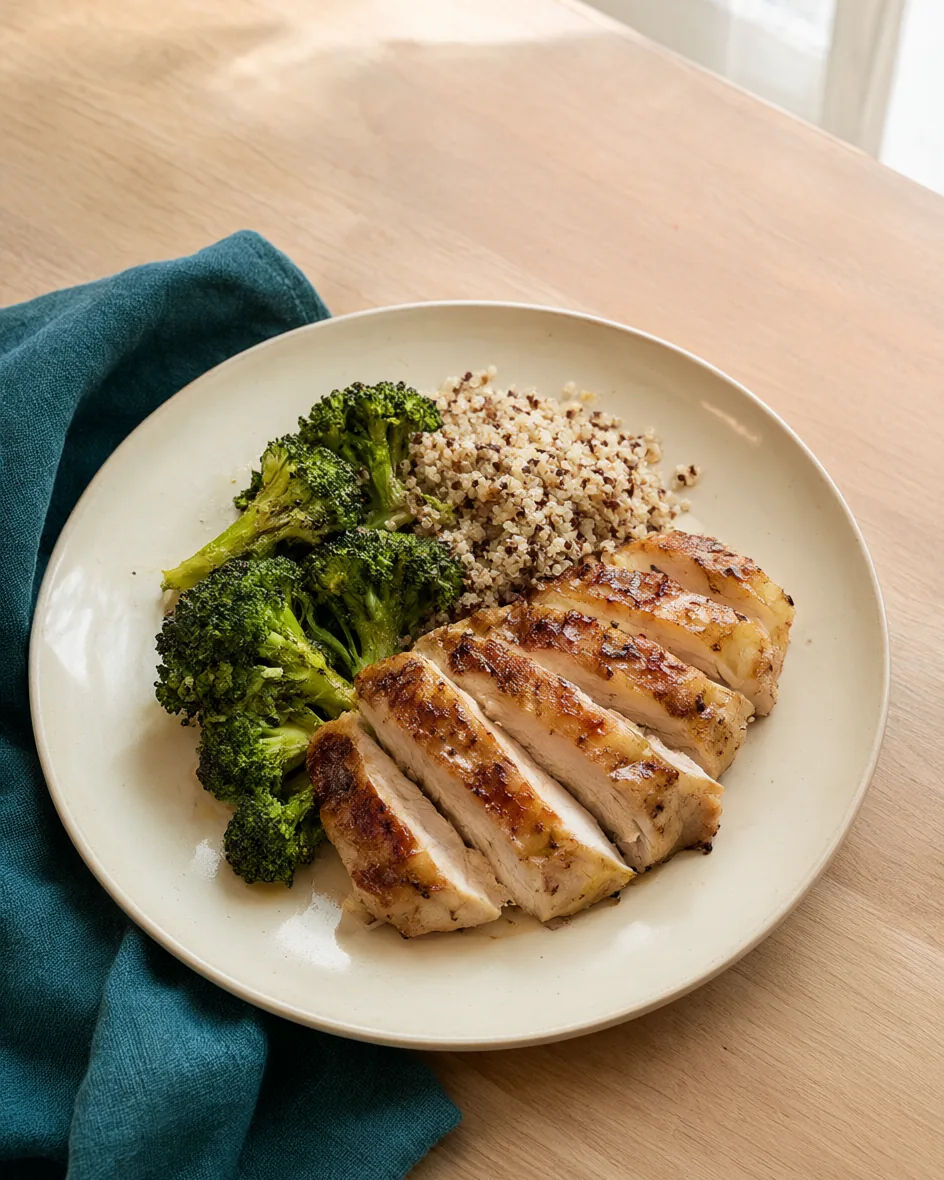
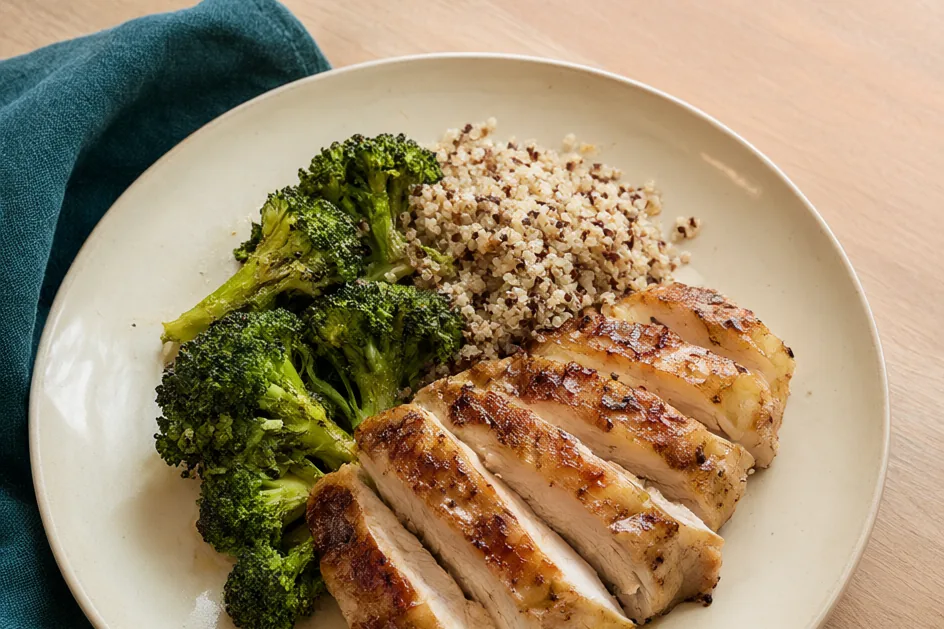
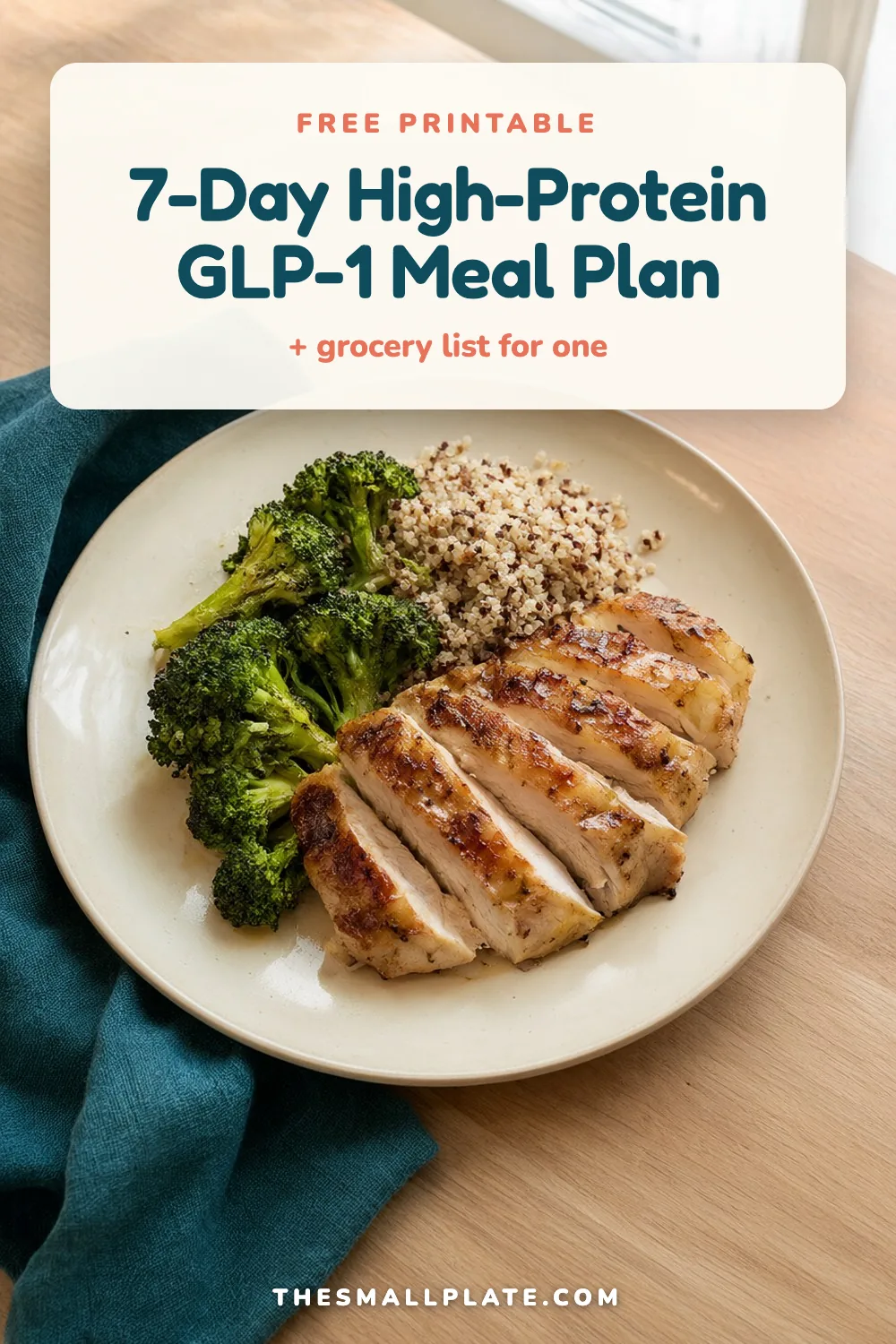
This GLP-1 meal plan uses small plates, protein first, and 3 meals plus 1 snack a day. Each day lands at about 84–97 g of protein from foods like Greek yogurt, eggs, chicken, fish and beans (USDA FoodData Central). One expert advisory suggests about 80–120 g a day for many adults on GLP-1 medications; ask your care team what’s right for you.
Food and lifestyle ideas only, not medical advice. Questions about your medication, side effects or nutrition needs go to your care team. Medical disclaimer.
When your appetite is smaller, every bite has more work to do. This plan keeps portions modest and puts a protein food at the center of every meal, so you are not trying to finish a big plate.
It is a food plan, not medical advice. Use it as a starting point, swap freely, and ask your care team or a registered dietitian about your own needs.
How the plan works
- Small plates, protein first. A 2025 joint nutrition advisory from four obesity and nutrition societies notes that protein-rich foods can be eaten first in a meal to make it more likely you get enough.
- 3 small meals and 1 snack. Smaller, more frequent meals are one of the comfort tips in that advisory, and going a long time without eating is on its list of things to avoid.
- Leftovers on purpose. Chicken, pork and chili each cover two meals, so you cook five nights, not seven.
- Protein grams you can trust. Every number comes from USDA FoodData Central. The totals count the main protein foods only; vegetables, fruit and grains add a little more.
How much protein per meal? Many nutrition researchers suggest aiming for about 25–30 g of protein at a meal (Paddon-Jones & Rasmussen, 2009). On low-appetite days that can be hard, and every bit of protein counts. Ask your care team or a registered dietitian what your daily target should be.
The 7-day high-protein meal plan
Portions are small on purpose. If a meal is too much, eat the protein part first and save the rest for later in the day.
| Day | Breakfast | Lunch | Snack | Dinner |
|---|---|---|---|---|
| Mon | Greek yogurt, berries, hemp hearts (26 g) | Chicken and veggie bowl (26 g) | String cheese + apple (7 g) | Salmon, broccoli, ½ cup quinoa (26 g) |
| Tue | 2 eggs, 1 oz cheddar, 1 toast (22 g) | Albacore tuna salad on toast (24 g) | Cottage cheese + pineapple (14 g) | Turkey taco bowl with black beans (31 g) |
| Wed | Yogurt and milk berry smoothie (25 g) | Chicken salad with parmesan (29 g) | Almonds + pear (6 g) | Shrimp and edamame stir-fry (29 g) |
| Thu | Cottage cheese toast + egg (24 g) | Tofu quinoa bowl (26 g) | 2 hard-boiled eggs (12 g) | Pork tenderloin, sweet potato (22 g) |
| Fri | Overnight oats with hemp hearts (22 g) | Pork and chickpea salad (29 g) | Edamame (9 g) | Cod, peas, ½ cup quinoa (27 g) |
| Sat | Veggie scramble + toast (24 g) | Salmon salad on toast (24 g) | Greek yogurt + berries (17 g) | Small bowl of beef and bean chili (32 g) |
| Sun | Ricotta toast + 1 egg (24 g) | Leftover chili (32 g) | Pumpkin seeds + apple (9 g) | Turkey breast, veggies, quinoa (29 g) |
How to put each meal together
Breakfasts
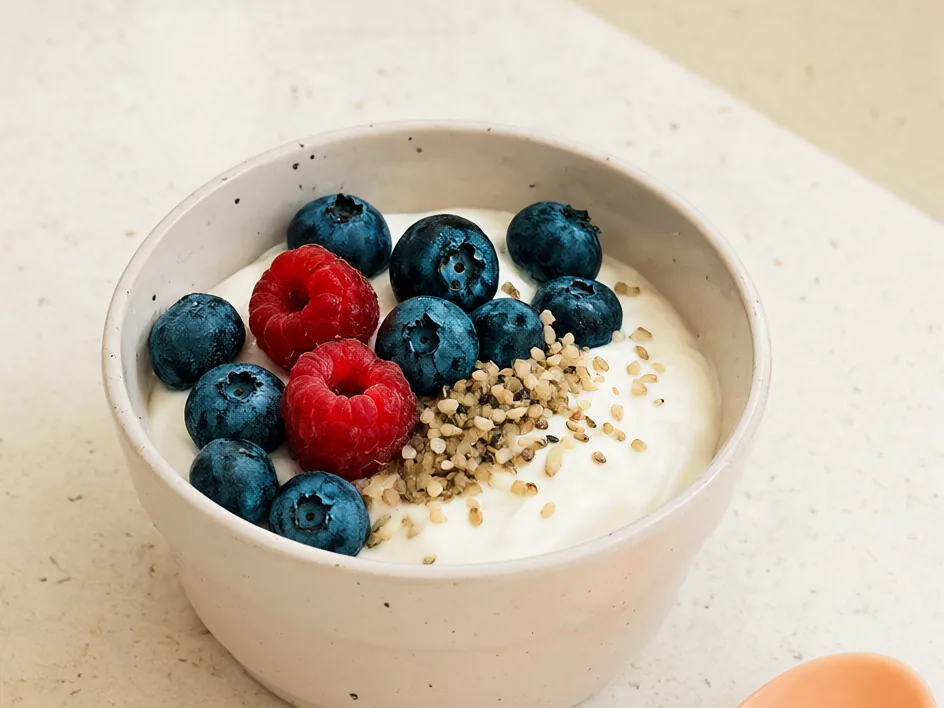
- Yogurt bowl: 6 oz plain nonfat Greek yogurt (17 g) + berries + 3 tbsp hemp hearts (9 g).
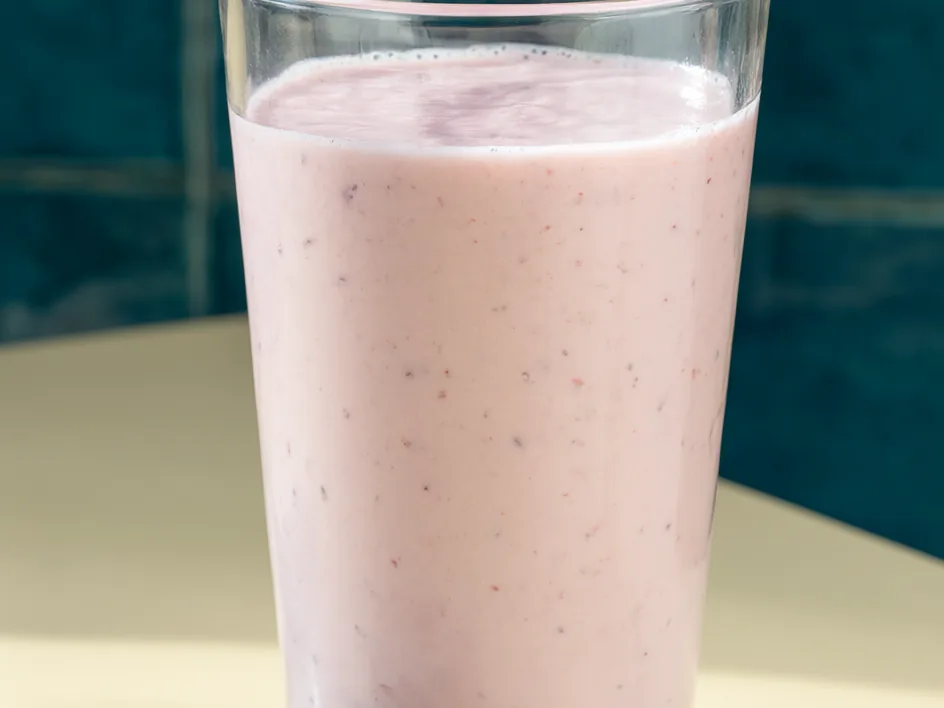
- Smoothie: blend 6 oz Greek yogurt (17 g) with 1 cup skim milk (8 g) and frozen berries.
- Cottage cheese toast: ½ cup 1% cottage cheese (14 g) on 1 slice whole-wheat toast (4 g), topped with a sliced hard-boiled egg (6 g).
- Overnight oats: ½ cup oats (5 g) + 1 cup skim milk (8 g) + 3 tbsp hemp hearts (9 g), soaked overnight.
- Veggie scramble: 2 eggs + 2 egg whites (20 g) with spinach, plus 1 slice toast (4 g).
Lunches and dinners
- Chicken bowl: 3 oz roasted chicken breast (26 g) over greens and roasted vegetables.
- Turkey taco bowl: 3 oz cooked ground turkey (23 g) + ½ cup black beans (8 g), salsa and lettuce.
- Shrimp stir-fry: 3 oz shrimp (20 g) + ½ cup shelled edamame (9 g) with frozen stir-fry vegetables.
- Tofu bowl: ½ cup firm tofu (22 g), browned, over ½ cup quinoa (4 g) and cucumber.
- Chili: 3 oz browned 90/10 beef (24 g) + ½ cup kidney beans (8 g) per bowl, simmered with canned tomatoes.
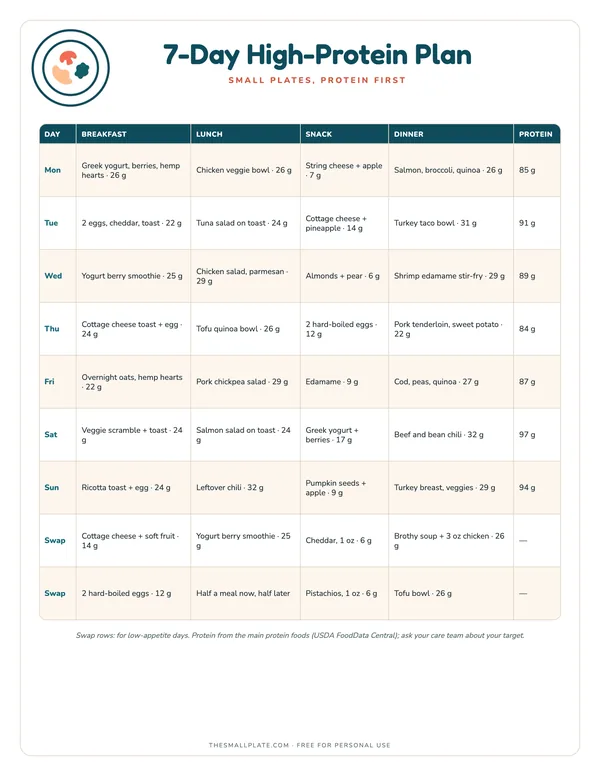
Free printable: 7-Day High-Protein Meal Plan
A 4-page PDF: the 7-day plan with protein grams, a grocery list for one, a Sunday prep checklist and a blank planner for your own week.
Download the free PDF (4 pages)Swaps for low-appetite days
Some days a full plate just won’t happen. The advisory notes that smoothies, cottage cheese and soups are often easier than red meat, cold cuts or hard cheeses when appetite is low.
- Swap any lunch for the yogurt and milk smoothie (25 g).
- Eat half a meal now and the other half 2–3 hours later.
- Trade dinner for ½ cup cottage cheese (14 g) with soft fruit, or a cup of brothy soup with shredded chicken.
- Eat the protein first, then stop when you are comfortably satisfied, not stuffed.
Set a phone reminder for meals. The advisory notes that an alarm or reminder to eat can help when hunger cues are quiet.
Grocery list and Sunday prep
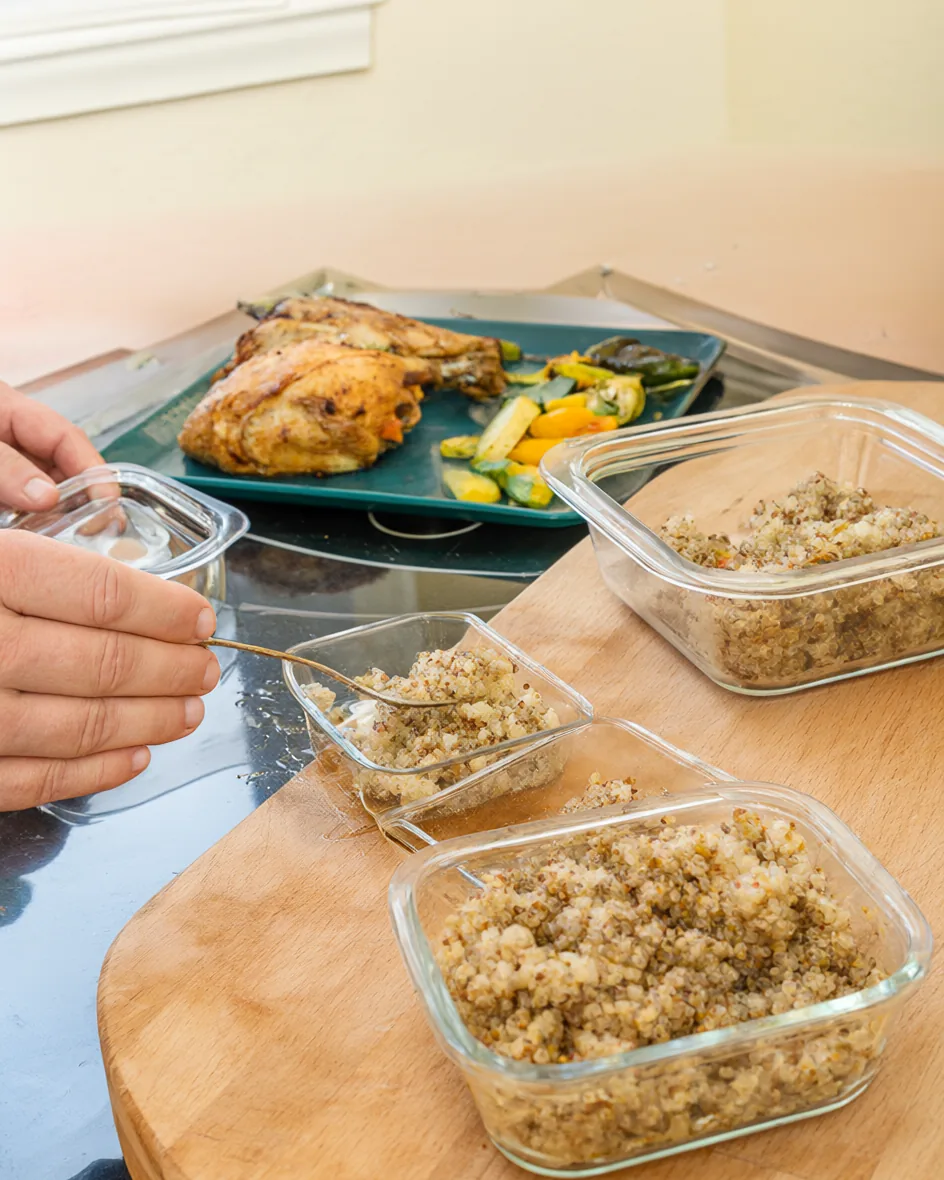
The printable grocery list is sized for one person for the whole week, grouped by store section. Then spend about an hour on Sunday so weekday meals are mostly assembly.
- Cook a pot of quinoa and portion it into ½-cup containers.
- Roast chicken breasts to 165°F for Monday and Wednesday lunches.
- Hard-boil 4 eggs for Thursday’s toast and snack.
- Wash and chop vegetables and fruit for the first half of the week.
- Portion snacks (almonds, pumpkin seeds, cheese) into small containers.
Food safety: refrigerate cooked food within 2 hours and eat leftovers within 3 to 4 days (USDA). That is why the pork and chili are cooked midweek instead of on Sunday.
Make the plan your own
Repeat your favorite days, swap fish for chicken, or use the blank planner page to write your own week. For more ideas, browse our high-protein meals and meal plans.
This plan is general food guidance. If you have diabetes, kidney disease or another condition, ask your care team or a registered dietitian how to adjust it.
Frequently asked questions
How much protein should I eat on a GLP-1 medication?
The basic RDA for adults is 0.8 g of protein per kg of body weight, and a 2025 joint nutrition advisory notes that higher targets (1.2–1.6 g/kg) have been proposed during weight loss. Your care team can give you your number.
What if I can't finish the meals in this plan?
That’s common. Eat the protein part first, save the rest for a later mini-meal, or swap in a smoothie. Every bit of protein counts.
Can I eat the same thing every day?
Yes. Repeating two or three favorite days makes shopping easier. Just keep a mix of protein foods, vegetables and fruit across the week.
Is this meal plan right for everyone on GLP-1 medications?
No single plan fits everyone. It is a general, food-first starting point; ask your care team or a registered dietitian how to adapt it to your health needs.
Sources: USDA FoodData Central (SR Legacy); Nutritional priorities to support GLP-1 therapy for obesity: a joint Advisory (Am J Clin Nutr, 2025); Paddon-Jones & Rasmussen, Dietary protein recommendations and the prevention of sarcopenia (2009); USDA FSIS: Leftovers and Food Safety